Projects

Collège Amadou Hampaté Bâ: A Beacon of Resilience in the Sahel, Niamey, Niger
Facing one of the world's most challenging climates and an urgent need for expanded educational access, the Collège Amadou Hampaté Bâ project provides a blueprint for resilient, passive architecture in the Sahel. By integrating advanced environmental strategies with local building techniques, the development accommodates up to 1,200 students while fostering social empowerment through inclusive construction practices. This initiative proves that high-performance educational infrastructure can be achieved without relying on expensive or unreliable mechanical systems.

Co-habitation: A Linear Dialogue in the Moroccan Landscape, Marrakech, Morocco
This experimental project redefines domesticity by exploring how architecture can foster both individual privacy and collective interaction within a working farm. By arranging two sixty-meter-long homes along a single axis, the design achieves seclusion through strategic placement rather than traditional physical barriers, allowing each structure to vanish from the other's line of sight. The result is an architectural study in balance, where the built environment serves as a conduit between personal reflection and communal life.

COF Outreach Village Schools: An Architecture of Scalable Empathy, Rakai and Lwengo Districts, Southern Uganda
The COF Outreach Village School programme represents an ambitious commitment to educational equity, aiming to create 20,000 new learning spaces across Southern Uganda. By partnering with local expertise to refine a modular design, the initiative provides a robust, adaptable framework that can be implemented across diverse topographies and environmental conditions. These schools serve as vital community hubs, bridging the gap between remote rural living and sustainable, high-quality infrastructure.

Classrooms at the University of Namibia: An Infill of Academic Resilience, Windhoek, Namibia
Amidst the rapid expansion of the University of Namibia, this project demonstrates an ingenious approach to campus growth by transforming a decommissioned swimming pool into a vibrant lecture complex. By respecting the existing topography and repurposing underutilized structures, the architects have created a sophisticated learning environment that addresses both immediate spatial needs and long-term climatic comfort. This development serves as a testament to how institutional infrastructure can be both economically astute and deeply integrated into its surroundings.

CSPS Laongo: A Sanctuary for Growth and Integration, Ouagadougou, Burkina Faso
In the rapidly expanding neighborhood of Rimkieta, where urban growth often outpaces basic infrastructure, this project serves as a vital bridge between educational necessity and social cohesion. By evolving from a simple "classroom under a canopy" into a structured, integrated center, it provides a stable environment for street children and sports programs to thrive. The design honors the spirit of the original informal space while establishing a grounded, resilient foundation for the community’s future.

Butaro District Hospital: A Healing Campus of Stone and Air, Butaro, Burera District, Rwanda
The Butaro District Hospital emerged as a profound beacon of health equity following the 1994 Genocide, transforming a region that previously lacked a single doctor. Set on a beautifully terraced hillside, the campus utilizes passive design and local craftsmanship to foster deep healing and rigorous infection control. By elevating regional materials like volcanic stone, the project not only provided essential care but catalyzed massive economic upliftment and skill-building within the community.

Butaro Doctors Housing: Cultivating Care in the Rwandan Hills, Butaro, Rwanda
The Butaro Doctors Housing addresses the critical shortage of medical professionals in rural areas by offering quality, community-oriented accommodation adjacent to the district hospital. By integrating thoughtfully into the hillside and utilizing local earth, the project provides a restorative sanctuary for clinical staff. This investment in built infrastructure directly supports the regional goal of making Butaro a leading model for rural healthcare in East Africa.

Butaro Cancer Centre of Excellence: A Healing Architecture of Dignity, Butaro, Burera District, Rwanda
The Butaro Cancer Centre of Excellence stands as a vital sanctuary in East Africa, merging crucial clinical efficacy with profound patient dignity. Developed to address the pressing need for accessible oncology care, the facility proves that world-class healthcare infrastructure can be deeply rooted in local empowerment and community craft. By actively employing hundreds of local builders and relying entirely on regional materials, the center transcends its medical function to become a powerful catalyst for socio-economic upliftment.

Busajo Campus: A Village of Healing and Heritage, Sodo, Ethiopia
Busajo Campus is a vital sanctuary dedicated to helping local street children rebuild their lives in a safe, familiar environment. Designed as a holistic, self-sufficient village, the campus utilizes the spontaneous architectural language of the Ethiopian suburbs while avoiding their typical spatial dispersion. Through the extensive use of local materials and passive climatic strategies, the facility roots itself deeply in its context, providing both physical protection and a profound sense of belonging for the youth it serves.

Bridle Road House: A Fynbos Sanctuary on Table Mountain, Cape Town, South Africa
Tucked tightly against the mountain, the Bridle Road House is a masterclass in weaving architecture directly into a dramatic natural landscape. Through the use of excavated courtyards and native Fynbos vegetation, the home forms a deep, protective relationship with its rugged site. It serves as a true living machine, utilizing natural water flows and the earth's thermal mass to passively moderate its climate in harmony with the fierce Cape weather.
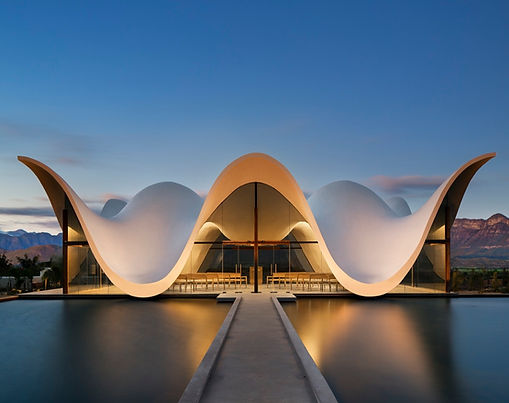
Bosjes Chapel: A Sculptural Homage to the Cape Fold Mountains, Western Cape, South Africa
Set amidst a lush pomegranate orchard and vineyard, Bosjes Chapel emerges from the earth as a poetic reflection of its natural surroundings. The structure sheds traditional, imposing church typologies in favor of a sweeping, undulating canopy that mirrors the dramatic silhouette of the surrounding mountain ranges. Rooted deeply in its context, the sanctuary offers an open embrace that seamlessly binds the built environment with the raw beauty of the South African landscape.

Bisate Lodge: Woven Sanctuaries of the Rwandan Hills, Ruhengeri, Rwanda
Nestled within the lush, rolling landscape adjacent to Volcanoes National Park, Bisate Lodge pays homage to the profound organic culture of Rwanda. Inspired by the historic thatched design of the King’s Palace at Nyanza, the lodge emerges as a series of spherical sanctuaries woven seamlessly into the dramatic topography. It stands as a celebration of authentic material heritage and off-grid resilience, offering a deeply rooted platform for guests to connect with the surrounding wilderness.

Xewa Sowé Center for Orphans: A Village of Earth and Straw, Sowé, Benin
The Xewa Sowé Center for Orphans goes beyond mere shelter to create a holistic, self-sustaining ecosystem for vulnerable children in rural Benin. Blending regional domestic heritage with modern spatial logic, the center integrates emergency accommodation, a food center, and public community spaces around a productive kitchen garden. By sourcing nearly all building elements within a thirty-kilometer radius, the project roots itself entirely in the local economy and the natural landscape.

Benga Riverside Residential Community: A Grounded Blueprint for Community Growth, Tete, Mozambique
Set on the picturesque banks where the Revúboé and Zambezi rivers converge, the Benga Riverside Residential Community establishes a pioneering neighborhood typology for the rapidly growing region of Tete. Designed to meet the rising demand for quality, affordable housing, the masterplan thoughtfully integrates homes, schools, and civic spaces within a rich natural ecosystem. It is an ongoing, long-term vision that actively champions social inclusion and environmental stewardship, blending the built environment effortlessly into the native landscape.

AU Dormitory: A Climatic Haven for African Scholars, Nansana, Uganda
Located in the rapidly urbanizing town of Nansana, just thirteen kilometers from Kampala, the AU Dormitory serves as a vital residential campus for fifty sub-Saharan students preparing for university abroad. Standing exactly on the equator but at a high altitude, the architecture embraces its environmental context rather than resisting it. By prioritizing locally sourced variegated red bricks and passive design principles, the campus operates as a breathing entity that balances the needs of individual reflection with vibrant community life.

Aquiles Eco Hotel: A Renewable Timber Prototype by the Sea, São Pedro, Cabo Verde
Located in the main square of a small fishermen village, the Aquiles Eco Hotel intentionally integrates into the existing social structure and architecture of its coastal surroundings. The architecture is simple, raw, and flexible, establishing a dialogue with the neighboring houses and small buildings. Designed as a sustainable prototype, the hotel prioritizes renewable resources to protect the fragile local ecosystem from depletion.

andBeyond Sossusvlei Desert Lodge: A Geometric Counterpoint in the Sand, Sossusvlei, Namibia
Suspended on the horizon where the earth curves away and the vast sky reaches down to touch the sand, this lodge is a profound architectural response to the desert. The design intentionally re-purposes original 1990s structures to craft a timeless sanctuary, placing a supreme emphasis on the surreal, fragile landscape. By functioning as a self-sustaining ecosystem, the project minimizes human impact while offering a deeply grounded, desert-inspired experience.

The Ahmed Baba Institute: Safeguarding the Ancient Wisdom of Timbuktu, Timbuktu, Mali
Historically revered as a center of learning, the ancient city of Timbuktu has accumulated thousands of Islamic texts over centuries, previously scattered across citizens' homes. The Ahmed Baba Institute emerges as a vital cultural sanctuary designed to safeguard this timeless literature in a unified, climate-controlled environment. Positioned thoughtfully between the ancient mud-brick city and its contemporary fringes, the architecture operates as both a physical and historical bridge for the community.

African Leadership University: A Modular Engine for Change, Kigali, Rwanda
Description: Located within Kigali Innovation City, this flagship campus physically embodies an educational model that prioritizes purpose and mission over traditional academic pathways. Designed to accommodate 1,200 undergraduate students, the facility weaves together modular learning spaces and expansive open-air terraces to actively foster mentorship and community-driven innovation. By prioritizing local craftsmanship, earth-based materials, and passive climatic strategies, the campus operates as a dynamic launchpad for Africa's next generation of leaders.

Bibliotheca Alexandrina: A Monumental Resurrection on the Mediterranean, Alexandria, Egypt
Commissioned to resurrect the fabled ancient library, the Bibliotheca Alexandrina stands as a massive, wedge-shaped volume on Egypt's Mediterranean coast. Designed by the Norwegian firm Snøhetta, the state-of-the-art facility acts as a bold exploration of form and engineering that leans heavily into stark modernity. While its commanding geometry and immense scale project a forward-looking cosmopolitanism, it simultaneously grapples with a need for regional belonging and the socio-historical complexities of its funding.

Abijo Mosque: A Laterite Beacon of Faith and Community, Lagos, Nigeria
Rooted deeply in the Abijo community, this mosque is a profound expression of faith realized through indigenous materiality and passive climatic design. Donated by the Crescent Bearers 1939 Lagos, the gathering space merges spiritual reverence with contemporary environmental stewardship. By harnessing the cooling properties of earth and relying entirely on natural ventilation, it stands as a testament to architecture that inherently respects both its people and the tropical climate.

Exhibition Centre for National Ceramic Industries: Corporate Identity Rooted in a Reclaimed Landscape, Vereeniging, South Africa
Situated on the edge of a rehabilitated quarry wetland in Vereeniging, South Africa, the Exhibition Centre for National Ceramic Industries operates as both a flagship showroom and a corporate sanctuary. Replacing a structurally compromised predecessor on unstable soil, the building emerges as a robust, climate-responsive intervention that frames panoramic views of the surrounding dam and mountains. Through careful material articulation and a deep respect for its ecological context, it sets a new standard for industrial architecture in the region.

Bidi Bidi Performing Arts Centre: A Stage for Healing and Resilience, Bidi Bidi Refugee Settlement, Uganda
A beacon of hope within Africa's largest refugee settlement, the Bidi Bidi Performing Arts Centre serves as a vital creative sanctuary for displaced communities seeking solace and connection. Designed as an elliptical amphitheatre, the structure straddles the border of a neighboring Ugandan village, deliberately blurring boundaries to foster unity through music, dance, and shared experience. By prioritizing locally sourced soil and community-led construction over imported industrial materials, this gathering space beautifully embodies our belief that context and humanity must always precede a rigid architectural concept.

House in Djilor-Djidiack: The Rhythms of the Bolong, Djilor-Djidiack, Senegal
Nestled on the sandy banks of an estuary river arm in the Sine Saloum region, this residential sanctuary stands a stone’s throw from the childhood home of poet and statesman Léopold Sédar Senghor. The architecture rejects Western modernism by merging the deep-shaded logic of tropical African dwellings with traditional veranda-style profiles. Built almost entirely of earth, stone, wood, and straw, the home establishes a symbiotic dialogue with the changing tides and delta winds. It serves as a striking template for contemporary conservation and slow, localized craftsmanship.

Mutende II: The Folding Canopy of Chingola, Chingola, Zambia
In the town of Chingola, a group of student architects and local collaborators achieved the extraordinary: designing and building a 350-square-meter educational facility in just seven weeks. With a lean budget of only £100 per square meter, the project, known as the Harold Mwenge Memory Academy or Mutende II, doubled the existing study space for the Mutende Children’s Village. The result is a flexible communal hub that breathes with the local climate and serves as a vital destination for the surrounding community.

Chipakata Children’s Academy: The Elevated Learning Canopy, Chipakata Village, Zambia
Situated 100 kilometers east of Lusaka, the Chipakata Children’s Academy is a transformative intervention in a landscape where education was once defined by a seven-kilometer walk. This primary school complex serves seven surrounding villages, establishing a permanent sense of place through a design that elevates the standard regional school typology. By integrating agricultural fields and teacher housing into the site plan, the academy functions not just as a school, but as a self-sustaining civic anchor for the rural community.

Heideveld Primary School: The Courtyard Compass, Cape Town, South Africa
Rising against the severe winds and intense sun of the Cape Flats, the Heideveld Primary School is a masterful exercise in climatic resilience and spatial hierarchy. The project was born from the logistical challenge of constructing a new facility while an existing school remained operational on a constrained site, resulting in a compact, inward-looking plan. By organizing the learning environment around a series of sheltered courtyards, the architecture provides a thermal and social refuge that protects students from the elements while offering a playful, dignified civic presence.

146 Waterkant: The Vertical Courtyard, Cape Town, South Africa
Constructed on a modest 90sqm plot just outside the historic De Waterkant conservation zone, this family residence is a masterclass in "silent architecture." The project negotiates the dense urban fabric of 17th-century semi-detached row houses by abstracting the rhythmic streetscape of the neighborhood into a singular, vertical home. It stands as a contemporary dialogue with conservation, balancing the need for modern living with a profound respect for the heritage of the Cape.

Ubuntu Centre: The Architecture of Interdependence, Bethelsdorp, South Africa
Rising as a series of folded forms within a beleaguered post-apartheid community, the Ubuntu Centre is a sanctuary for pediatric HIV treatment, education, and community empowerment. The design rejects the cold, sterile isolation of traditional clinics in favor of a model that prioritizes the de-stigmatization and normalization of healthcare. By weaving the building directly into the existing pedestrian fabric of the township, the architecture ensures that world-class social services are not just accessible, but are an integrated part of daily life.

Mzamba Community Schools: The Earth and Thatch Academy, Mzamba, South Africa
The primary intent was to establish an independent school that could grow organically alongside its students, moving away from static, monolithic institutional design. The architects envisioned a campus that functions as a micro-village, utilizing garden courtyards, covered porches, and central squares to dissolve the boundaries between formal instruction and communal play. This phased approach allowed the architecture to adapt to the specific needs of different age groups, from the sheltered, intimate gardens of the preschool to the more expansive, civic-oriented Grade 3 classrooms and library.

Gota Dam Residence: The House on the Rock, Harare, Zimbabwe
Perched atop a massive granite cliff, this residence is an artistic collaboration that treats architecture as a geological intervention. The structure overlooks a vast man-made reservoir, utilizing cantilevered forms and raw stone to blur the boundary between the domestic interior and the awe-inspiring Zimbabwean horizon. It stands as a testament to building with integrity during periods of extreme economic scarcity, relying on local materials and site-specific excavation.

Our Lady of Victoria Monastery: A Bricked Barrel of Light, Kijonjo, Uganda
In the rural landscape of Kyotera District, the Our Lady of Victoria Monastery rises from the earth as a pure, spiritual haven for a growing community of Cistercian Trappist monks. Designed by Localworks to repair and expand an earthquake-damaged site, the complex utilizes locally fired clay bricks and passive design to forge a profound connection with its environment. The architecture embraces a Cistercian austerity, where material purity and brilliant manipulations of natural light replace cosmetic ornamentation.

Ross Langdon Health Education Centre: A Legacy of Light and Earth, Mannya, Uganda
Designed by the late Australian architect Ross Langdon and respectfully realized by Studio FH Architects, this modest health education center stands as a poignant tribute in the rural village of Mannya. Funded by the Cotton On Foundation, the structure functions as a community gathering space capable of seating 150 people for vital health discussions and communal events. By utilizing intensely local materials and ingenious, low-tech lighting solutions, the building embodies a deep respect for its context and its people.

Multipurpose Hall at St. Bernard's: An Amphitheater of Community and Light, Mannya, Uganda
Serving the rural community of Mannya, the Multipurpose Hall at St. Bernard's Secondary School provides a vital gathering space that blends dining and assembly functions for hundreds of students. Funded by the Cotton On Foundation and designed by studio FH architects, the structure responds directly to the site's topography, carving a sweeping amphitheater into the gentle hillside. The architecture embraces local craftsmanship and passive design, creating a vibrant, sheltered heart for the campus.

Kidepo Valley Primary Schools: A Sanctuary for Conservation Education, Geremech and Sarachom, Uganda
In the remote Karamoja region, adjacent to the Kidepo Valley National Park, two primary schools emerge from the landscape as living tools for conservation. Designed by Localworks for the African Wildlife Foundation, the Geremech and Sarachom schools serve as vital incentives for local communities to view wildlife as a livelihood opportunity rather than a threat. The architecture adopts a "camouflage" aesthetic, utilizing earth and stone to blend harmoniously into the savannah and agricultural surroundings while providing a secure, off-grid environment for learning.

Kyatiri House: A Sun-Shielded Sanctuary, Kyatiri, Masindi District, Uganda
Set against the rural landscape near the village of Kyatiri, this four-bedroom retirement home is a masterclass in climate-responsive design. By utilizing heavy masonry walls to guide the flow of the home, the dwelling offers a sheltered, peaceful retreat tailored to the rhythms of the equatorial sun. It stands as a thoughtful integration of robust local materials and passive ventilation, ensuring comfort without relying on mechanical cooling.

Petit Village Hotel: An Earthy Urban Lodge, Kampala, Uganda
Nestled within a bustling boutique mall in Kampala, the Petit Village Hotel expansion redefines the urban hospitality experience by blending natural materiality with thoughtful climate-responsive design. Evolving from an original "lodge in the city" concept, this three-story annex seamlessly stitches together distinct architectural identities through the rich use of timber and pigmented plaster. It stands as a testament to the power of continuing an established material language, proving that multi-story structures can maintain a deep, grounded connection to their local environment.

Lapalala Wilderness School: A Pedagogical Landscape of Earth and Light, Vaalwater, South Africa
The Lapalala Wilderness School stands as a profound testament to the power of restorative architecture within the UNESCO-listed Waterberg Biosphere. Designed as a net-zero educational village, the campus replaces a degraded pastoral site with a series of "living machines" that teach conservation through their very form. It is a sanctuary where four thousand students annually transition from the classroom to the visceral reality of the Palala River’s ecosystem, housed within a structure that breathes with the landscape.

Dot.Ateliers: A Monolith of Earth and Light, Osu-Accra, Ghana
Nestled within the vibrant, historic Osu waterfront of Accra, Dot.Ateliers emerges as a groundbreaking residency and "architectural tool" for the Ghanaian creative community. Founded by the artist Amoako Boafo, this three-story monolith serves as a defiant rejection of high-energy, imported building styles in favor of a structure that breathes with the land. It functions as an incubator, showroom, and communal gathering point, designed to foster a dialogue between the art produced within its walls and the deep cultural context of the Atlantic coast.

Faculty of Medicine and Pharmacy: A Desert Oasis for Healing, Laayoune, Morocco
The Faculty of Medicine and Pharmacy of Laayoune stands as a monumental tribute to the architectural heritage of southern Morocco. Designed by SAMA ARCHITECTES, the campus rejects the typical glass-heavy aesthetic of modern institutional buildings, opting instead for a language of mass, shadow, and ochre-toned earth. By reinterpreting the "ksour" (fortified village) and oasis typologies, the project creates a climate-responsive sanctuary for learning that feels both ancient and cutting-edge.

The Shippon Offices: An Earthen Anchor in Accra, Accra, Ghana
The Shippon Offices represent a homecoming for Adjaye Associates, serving as the firm's own global headquarters within the heart of the Cantonments neighborhood. This four-story structure rejects the sterile, glass-and-steel vernacular of modern corporate West Africa in favor of a tactile, grounded presence. By integrating ancient material wisdom with sophisticated structural engineering, the project proves that high-density urban workplaces can breathe and belong to the soil they stand upon.

Taroudant University: The Ocher Oasis, Taroudant, Morocco
Taroudant University stands as a modern reinterpretation of the deep Moroccan South, anchoring itself in a secular town rich with cultural identity. The sprawling, low-rise campus blurs the line between the built environment and the rugged landscape, offering a poetic austerity that rejects architectural clichés. It is a massive, earth-toned sanctuary that plays masterfully with light, shadow, and flowing nature, creating an environment where the student becomes one with the architecture.

Framed Escape Library: The Earthen Enclave, Abetenim, Ghana
At the entrance of Abetenim village, this library emerges as a quiet testament to resourcefulness and collaboration. Built with a modest budget and without electricity on site, it stands as a model of environmentally friendly, water-efficient construction. The structure invites students into a cool, light-filled sanctuary for study and reflection, proving that profound architecture can be achieved with little more than the earth beneath our feet.

Epiphany of the Lord Church: The Biomimetic Sanctuary, Nianing, Senegal
Located on the renowned Shell Coast, this striking modern church embodies a harmonious synthesis of local ecology, biomimicry, and cultural heritage. It stands as a beacon of interfaith solidarity in a predominantly Muslim nation, utilizing the innate forms of the coastal landscape to create a passive, spiritually uplifting space. By drawing structural inspiration from native seashells and termite mounds, the building functions as a natural climate-control engine while serving the growing Catholic community.

Reteti Education Centre: The Architecture of Coexistence, Namunyak Wildlife Conservancy, Kenya
Set within Africa’s first community-owned elephant sanctuary, this immersive space stands as a profound testament to the relationship between the Samburu people and their surrounding ecology. It serves as an educational platform that translates the intricate process of wildlife rehabilitation into a tactile spatial experience. By embracing local traditions and prioritizing a light ecological footprint, the structure operates not just as a shelter, but as an active participant in the region's environmental restoration.

Ilima Primary School: Cultivating the Canopy, Ilima, Democratic Republic of the Congo
Deep within the ecologically rich yet vulnerable Congo Basin, the Ilima Primary School emerges as a profound architectural statement on conservation and community resilience. Conceived as a living bridge between education and the preservation of endangered ecosystems, the campus empowers a remote village to thrive in harmony with its surroundings. It is a structure that took little from the land, returning instead a legacy of craftsmanship, ecological stewardship, and localized opportunity.

Goethe-Institut Dakar: A Canopy of Earth and Dialogue, Dakar, Senegal
The Goethe-Institut Dakar stands as a powerful testament to equitable cultural exchange and grounded architectural practice in West Africa. Designed by Pritzker laureate Francis Kéré, the building eschews imported modernism for a living, breathing structure crafted entirely from local laterite earth. It is a space where the layered heritage of Senegal meets a renewed, forward-looking era of German cultural partnership, all sheltered beneath the protective embrace of a central baobab tree.

Giovanni Ravazzotti Biodiversity Centre: An Ancestral Dialogue with the Waterberg, Lapalala Wilderness, Limpopo, South Africa
The Giovanni Ravazzotti Biodiversity Centre is a sanctuary of healing and research, emerging from a landscape once scarred by intensive farming. Designed as a bridge between high-level ecological study and public engagement, the facility serves as a permanent home for the Waterberg’s natural history while maintaining a resident curator to oversee its evolving archives. By integrating nearby San rock art and Iron Age archaeological sites into its educational mandate, the center frames conservation not as a modern novelty, but as a continuation of a multi-generational conversation with the land.

Bangre Veenem School Complex: A Canopy of Clay and Light, Koudougou, Burkina Faso
In the village of Youlou, the Bangre Veenem School Complex reimagines the sprawling educational campus as a compact, socially integrated sanctuary. By condensing the footprint of the school by forty percent, the project preserves vital agricultural land for the community while offering a dignified space for learning from nursery to high school. It is a structure that honors the existing landscape, built around the majestic presence of ancestral Néré trees and the daily rhythms of the village.

Ait Ouabelli Cultural Centre: A Sanctuary of Stone and Palm, Ait Ouabelli, Province of Tata, Morocco
In the rugged, sun-drenched landscape of the Tata Province, this cultural center stands as a defiant and beautiful alternative to the encroachment of standardized concrete blocks. Salima Naji’s design revives the architectural soul of southern Morocco by utilizing loadbearing stone and palm timber to create a dignified public space for an impoverished community. It serves as a vital educational hub, offering a library, multimedia center, and creative workshops within a structure that breathes with the desert.

New Guabuliga Market: A Modular Landscape for Trade, Guabuliga, Northern Region, Ghana
Emerging from a long-term engagement between the Vienna-based [applied] Foreign Affairs laboratory and the community of Guabuliga, this new market is a radical rethink of the West African commercial hub. Located at the strategic edge of a protected "no-building" greenbelt, the project combines a cellular metal roofscape with a robust concrete floorscape. Its iconic, modular design is engineered to attract traders to this remote town, fostering socio-economic growth through an architecture that bridges the gap between traditional round geometries and modern, high-performance construction.

Port Sudan Pediatric Center: A Crimson Shield of Mercy, Port Sudan, Red Sea State, Sudan
On the outskirts of Port Sudan, where the population has exploded due to the expansion of the harbor and an influx of refugees fleeing drought and conflict, the Port Sudan Pediatric Center stands as a vital outpost of free healthcare. Designed by TAMassociati for the NGO EMERGENCY, this project transcends the standard institutional hospital. By embracing the settling principles of traditional Arab houses and utilizing ancient passive cooling techniques like wind chimneys and specialized brick vaults, the clinic provides a high-performance medical environment that remains deeply connected to the local culture and the Red Sea landscape.
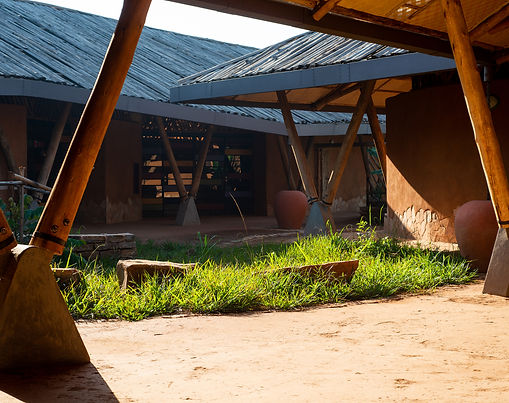
Mustardseed Junior School: The Organic "Large Home" for Learning, Sentema, Uganda
Located near the village of Sentema, just 20km west of Kampala, the Mustardseed Junior School (MJS) is a radical departure from traditional educational architecture. Designed and built by Localworks, the school is envisioned as a "large home", an enabling, inspirational environment where not a single classroom is a rectangle. Built using site-harvested earthbags and a concrete-free foundation, the project merges indigenous reforestation with playful, organic forms to prove that a school can enrich its environment as much as its students.

Butaro Doctors’ Housing: The Foundation of the Healing Hill, Butaro, Rwanda
In the rural Burera District of Rwanda, providing world-class healthcare is as much about logistics as it is about architecture. To attract and retain top medical talent for the nearby Butaro District Hospital, MASS Design Group created a housing initiative known as Umusozi Ukiza (The Healing Hill). These four duplexes are more than just residences; they are a masterclass in seismic-safe, sustainable construction that utilizes volcanic stone and compressed earth to provide a space of dignity and respite for those on the front lines of global health.

ZOMA Museum: The Sculpted Soul of Addis Ababa, Ethiopia
In a capital city rapidly transforming into a forest of concrete and glass, the ZOMA Museum stands as a breathtaking 25-year labor of love. Founded by artist Elias Sime and curator Meskerem Assegued, this contemporary art museum is a living manifesto for Ethiopian vernacular architecture. Built using the traditional "wattle and daub" (Chika) technique, its hand-sculpted walls prove that mud and straw, when treated with ancestral knowledge and artistic vision, can surpass any modern material in both beauty and resilience.

Koudougou Central Market: A Masterclass in Earth and Vaults, Koudougou, Burkina Faso
Designed as a profound urban community project, the Koudougou Central Market is an Aga Khan Award-winning triumph of sustainable infrastructure. Crafted by Laurent Séchaud and the Swiss Agency for Development and Cooperation (SDC), the design utilized a highly participatory process to keep the market in its historic city center. Spanning 29,000 square meters, the project rejects imported concrete in favor of locally extracted Compressed Earth Blocks (CEB) and soaring vaulted arches, providing a naturally cooled, beautifully rhythmic commercial hub that serves over 1,800 vendors.

Bethel Secondary School: Escaping the Concrete Oven, Gourcy, Burkina Faso
In a region where temperatures regularly soar into the mid-40s (Celsius), the original concrete classrooms of Gourcy acted like dark, unbearable ovens. To solve this crisis and expand access to education, non-profit architecture firm Article 25 partnered with the local community to design the Bethel Secondary School. By utilizing passive cooling strategies, including a double-roof system and adjustable louvers, the new campus provides eight naturally ventilated classrooms, essential sanitation infrastructure, and a comfortable learning sanctuary for 300 additional students.

Singita Kwitonda Lodge: Volcanic Stone and Woven Earth, Volcanoes National Park (Ruhengeri), Rwanda
Set on the breathtaking edge of Rwanda's Volcanoes National Park, the natural habitat of the critically endangered mountain gorilla, the Singita Kwitonda Lodge is a masterclass in localized, conservation-driven architecture. Conceptualized by GAPP Architects & Urban Designers alongside developers Milton Group, the lodge rejects imported aesthetics in favor of raw, heavy materials sourced directly from the earth. Crafted by over 500 local artisans, the buildings feature sweeping lava rock walls, hand-fired terracotta brick pods, and intricate woven ceilings, creating a gentle but monumental tribute to the Rwandan landscape.

Kachumbala Maternity Unit: Welcoming Life Through Passive Design, Kachumbala, Uganda
Located in an impoverished rural region of eastern Uganda, the Kachumbala Maternity Unit replaces a crumbling 1950s-era facility that could no longer safely serve its community. Designed by HKS in partnership with Engineers for Overseas Development, this passively cooled, off-grid facility was built entirely by hand using locally pressed soil blocks. By merging sustainable design with essential healthcare, the new unit provides a welcoming, hygienic sanctuary that has successfully eliminated maternal and infant mortality at the facility since its opening.

Ineza Clinic: A Breathable Sanctuary of Stone and Earth, Bubanza, Burundi
Set on a steep, verdant hillside in the Bubanza region of Burundi, the Ineza Clinic is a testament to the life-saving power of localized architecture. Designed by Pritzker laureate Francis Kéré (Kéré Architecture), this decentralized healthcare campus provides vital maternity and surgical care to a rural population that previously faced grueling journeys for basic medical attention. By organizing the clinic into ten breathable pavilions built entirely from locally fired clay bricks and quarried stone, the project not only minimizes its carbon footprint but acts as a live laboratory for community empowerment and knowledge transfer.

Warka Tower: Harvesting Lakes in the Air, Dorze, Ethiopia
In remote Ethiopian villages, fetching water is often a dangerous, hours-long task that yields contaminated results. To combat this global crisis, architect Arturo Vittori (Architecture and Vision) developed the Warka Tower, a lightweight, bamboo structure that harvests potable water directly from the atmosphere. Costing a fraction of traditional infrastructure, this biomimetic tower provides up to 100 liters of clean drinking water a day while creating a vital, shaded gathering space for the community.

New Gourna Village: The Cradle of Modern Earth Architecture, Luxor (Ancient Thebes), Egypt
Designed and built between 1946 and 1952 by the legendary Egyptian architect Hassan Fathy, New Gourna Village is a foundational masterpiece of sustainable human settlement. Created to relocate a community living above the ancient Pharaonic tombs of Thebes, the village famously rejected the industrial "modern movement" in favor of traditional mud-brick construction and passive climatic design. Today, it stands as the subject of a major UNESCO safeguarding project, preserving Fathy’s humanist philosophy and his globally influential vision of "Architecture for the Poor."

Waterbank School Campus: Harvesting Rain and Resilience, Laikipia (Central Highlands), Kenya
In regions where water scarcity dictates daily life, PITCHAfrica transformed the traditional school building into a massive, low-cost rainwater harvesting machine. The Waterbank Secondary School Campus in Laikipia is an award-winning, radically functional design that captures and filters over 2 million liters of water annually. By providing clean drinking water and irrigation directly on campus, the architecture eliminates the daily burden of fetching water, dramatically increasing school attendance and fostering gender equality in the region.

Centre for Earth Architecture: Preserving the Mud-Brick Legacy, Mopti, Mali
Situated on the edge of an interior lake in Mopti, the Centre for Earth Architecture is a modern homage to Mali’s ancient mud-building heritage. Designed by Kéré Architecture and commissioned by the Aga Khan Trust for Culture (AKTC), the center was built following the restoration of the iconic Mopti Mosque. Constructed entirely from Compressed Earth Blocks (CEB), the building features sweeping barrel vaults and overhanging roofs, creating a naturally cooled cultural hub that honors the past while serving the modern needs of the Komoguel district.

InsideOut School: Blurring the Boundaries of Learning, Abetenim (Yeboahkrom), Ghana
Set in a rural Ghanaian village where the wind had destroyed the only local school, InsideOut is an award-winning educational prototype built for just €12,000. Designed by Andrea Tabocchini and Francesca Vittorini, the school was constructed entirely by hand in 60 days using compacted local earth and wood. By blurring the boundaries between interior and exterior, the design offers a naturally ventilated, deeply sustainable alternative to standard introverted classrooms.

PORET Kindergarten: A Bird's Nest of Earth and Timber, Chaseyama, Zimbabwe
Designed for the PORET permaculture community in the low-rainfall region of Chaseyama, this kindergarten is a masterclass in holistic sustainability. Led by visionary architect Anna Heringer, the project relies entirely on local resources, utilizing rammed earth and timber to create a playful, multifunctional space. Embracing the reality of the harsh local climate, the building is designed to eventually compost back into the earth, leaving behind no environmental harm, but rather a community enriched with new construction skills.

Kigutu Staff Housing: An Architecture of Conscience, Kigutu, Burundi
Located in a remote, mountainous village in southern Burundi, the Kigutu Staff Housing provides a much-needed sanctuary for health-care workers serving one of the most impoverished regions on earth. Designed by American architect Louise Braverman in deep collaboration with the local community, this 6,000-square-foot, 18-bed dormitory relies entirely on passive cooling and off-grid energy. Built by hand using locally fired clay bricks, the project creates a dignified environment while transferring vital 21st-century seismic construction skills to the villagers.

Rebuilding Ngarannam Village: Afro-Minimalism and Resilience, Ngarannam (Borno State), Nigeria
Following the devastating destruction of their community by Boko Haram in 2015, the displaced people of Ngarannam longed to return home. Partnering with the UNDP and the Nigerian Government, celebrated Nigerian architect Tosin Oshinowo (Oshinowo Studio) designed an entire resettlement village of 500 homes and public facilities. By deeply consulting with the community, Oshinowo created a human-centered, solar-powered settlement that uses earth-toned materials and Afro-minimalist design to restore not just infrastructure, but the Kanuri/Islamic way of life.

Shipwreck Lodge: A Flotilla in the Dunes, Skeleton Coast, Namibia
Set against the desolate and unforgiving landscape of Namibia’s Skeleton Coast, the Shipwreck Lodge is a masterclass in resilient, context-driven eco-tourism. Designed by pioneering Namibian architect Nina Maritz, the luxury lodge draws inspiration from the skeletal remains of ships, like the famous foundered Dunedin Star, that dot the coastline. Conceived as abstracted wreckage fragments assembled by survivors, the timber cabins provide a stark, beautiful contrast between the relentless exposure of the desert and the warm, protective shelter within.

Fass School and Teachers' Residences: The Oval of Education, Fass, Senegal
Situated in a remote region of Senegal, the Fass School and Teachers’ Residences is a groundbreaking educational facility designed by Toshiko Mori. As the first school in a network of over 110 villages to provide secular education alongside traditional teachings, it accommodates up to 300 students. The building reimagines vernacular architecture through a stunning, oval-shaped mud-brick and thatch structure, perfectly blending cultural heritage with passive climatic design.

Dandaji Daily Market: A Canopy of Color and Earth, Location: Dandaji (Tahoua), Niger
In rural Niger, markets traditionally run on a weekly basis, severely limiting the development of a sustained local economy. To reverse this trend, atelier masōmī (led by Mariam Kamara) designed the Dandaji Daily Market. Built around an ancient, sacred tree, this visually striking permanent market utilizes simple compressed-earth brick stalls and a whimsical, alternating metal canopy to create a highly functional, naturally cooled public infrastructure that instills deep civic pride.

Sandibe Okavango Safari Lodge: The Pangolin of the Delta, Location: Okavango Delta, Botswana
Set deep within the heart of the Okavango Delta, a UNESCO World Heritage site and one of Africa's seven natural wonders, the Sandibe Safari Lodge is a triumph of organic architecture. Designed by Nicholas Plewman Architects in association with Michaelis Boyd Associates, this 24-bed luxury boutique hotel completely rejects the heavy footprint of traditional concrete resorts. Inspired by the shy, elusive pangolin, the lodge features a sweeping carapace of woven timber and shingles that blends so seamlessly into the riparian forest that elephants and leopards continue to roam beneath it.

Primary School in Tanouan Ibi: Vaults of the Dogon, Location: Tanouan Ibi, Mali
Situated on the vast plains of Dogon Country near the UNESCO-listed Cliff of Bandiagara, the Primary School in Tanouan Ibi is a masterpiece of sustainable, vernacular architecture. Designed to blend seamlessly into the Malian landscape, the building utilizes striking barrel vaults and Hydraulically Compressed Earth Blocks (HCEB). More than just a school, it serves as a training ground for local masons and a meaningful gathering place for the entire village community.

Thread Artists' Residency: The Inverted Canopy, Location: Sinthian (Tambacounda), Senegal
Situated in the remote village of Sinthian, Senegal, Thread is a socio-cultural center and artist residency that proves art, culture, and architecture can directly support agriculture, education, and health. Designed by Toshiko Mori Architect and spearheaded by the Josef and Anni Albers Foundation, the building utilizes an innovative inverted thatch roof and exclusively local materials. It serves as an agricultural hub, a water source, and a gathering ground for the community, challenging the myopic perception of rural West Africa.

Sacred Heart Cathedral of Kericho: A Vault of Cypress and Light, Kericho, Kenya
Set amidst the lush tea plantations of the Kenyan Highlands, the Sacred Heart Cathedral of Kericho is a monumental achievement in contextual religious architecture. Designed by John McAslan + Partners, the building is defined by a striking, ascending roof that shelters up to 1,500 worshippers. By relying entirely on natural ventilation, daylighting, and locally sourced materials, from Kericho-grown cypress to Nairobi Blue stone, the cathedral honors both the faith and the frugality of its rural community.

Basuna Mosque: Parametric Peace in the Desert, Basuna (Sohag), Egypt
Located in a noisy, densely populated village in Upper Egypt, the Basuna Mosque is an oasis of tranquility. Designed by Dar Arafa Architecture, this modern place of worship reimagines traditional Islamic geometry to combat the hot and arid climate. Featuring a breathtaking, light-block central dome and a network of pendentive skylights, the building filters the harsh desert sun and captures cooling breezes, creating a serene sanctuary for both spiritual and community life.

Women’s Opportunity Center: Rebuilding Heritage and Hope, Kayonza, Rwanda
Set on a two-hectare site in rural Rwanda, the Women’s Opportunity Center is a mini-village dedicated to empowering female survivors of war. Designed by Sharon Davis Design in collaboration with Women for Women International, the center revives the lost Rwandan tradition of circular, woven-reed dwellings. By utilizing 450,000 clay bricks hand-pressed by the women themselves, the architecture actively creates economic opportunity, rebuilds social infrastructure, and restores African heritage.

Black Rhino Academy: The Catenary Arches of Karatu, Karatu, Tanzania
Situated on a hilly site just outside the breathtaking Ngorongoro Crater, the Black Rhino Academy is an immersive environment for learning from nature. Designed by NLÉ (led by Kunlé Adeyemi), this primary and secondary boarding school rejects the standard rigid grids of institutional buildings. Instead, it utilizes locally made earth bricks to form a series of sweeping catenary arches, creating a campus that mimics the undulating savanna and the protective clusters of traditional Masai settlements.

Tambacounda Hospital: The Breathing S-Curve, Tambacounda, Senegal
Serving as the only major hospital for a region of over 20,000 patients, the Tambacounda Maternity and Paediatric Hospital is a vital lifeline in eastern Senegal. Designed by Manuel Herz Architects and backed by the Albers Foundation, this two-story facility rejects the overcrowded, stuffy corridors of traditional clinics. Instead, it takes the form of a sweeping, curvilinear S-shape wrapped in a breathable brick lattice, providing a naturally cooled sanctuary for healing.

Guga S'Thebe Children's Theatre: The Art of Upcycling, Langa (Cape Town), South Africa
Located in the heart of Cape Town’s oldest township, the Guga S'Thebe Children's Theatre is a vibrant celebration of recycled architecture. Designed and built through an international collaboration between local architects, the community of Langa, and students from three global universities, the theatre transforms discarded shipping containers, fruit crates, and straw bales into a colorful, acoustically brilliant performing arts center.

Rwanda Cricket Stadium: Vaults of Earth and Sport, Kigali, Rwanda
Emerging from the rolling landscape of Kigali, the Rwanda Cricket Stadium is a marvel of modern engineering and local craftsmanship. Designed by Light Earth Designs, the pavilion moves away from the steel-and-concrete norms of global sports architecture. Instead, it features three sweeping, parabolic vaults built entirely from soil-stabilized tiles. The form mimics both the trajectory of a bouncing cricket ball and the cherished hills of Rwanda, creating a dynamic, low-carbon hub for community and sport.

The Library of Muyinga: Woven from Earth and Sisal, Muyinga, Burundi
Designed as the first phase of an inclusive school for deaf children, the Library of Muyinga is a masterpiece of participatory architecture. BC Architects worked alongside the local community to revive traditional building techniques, constructing the building entirely from Compressed Earth Blocks (CEB) and baked clay tiles. The library's defining feature is a massive, hand-woven sisal rope hammock suspended beneath the high ceilings, creating a magical mezzanine where children can read and dream.

Alioune Diop University Teaching Building: The Breathing Canopy, Bambey, Senegal
Faced with extreme temperatures and a lack of infrastructure, the architects at IDOM designed the Alioune Diop University Teaching Building not as a conventional structure, but as a giant, protective tree. By utilizing a massive double-roof canopy and a hand-crafted, perforated concrete facade, this project creates a naturally cooled oasis for 1,500 students in the heart of the Sahel, reducing interior temperatures by 10 degrees without a single air conditioner.
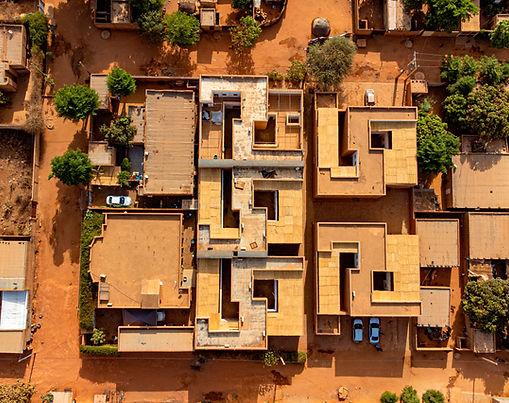
Niamey 2000: Urban Earth for the Modern Middle Class Location: Niamey (Kollo District), Niger
As Niamey faces a rapid housing crisis, Niamey 2000 emerges as a revolutionary prototype for urban living. Designed by United4Design (including Mariam Kamara and Yasaman Esmaili), this 1,700-square-meter development rejects the sprawling, concrete-heavy suburban model. Instead, it looks to the dense, pre-colonial cities of the Sahel to create a high-density, multi-story housing complex built entirely from unfired earth.
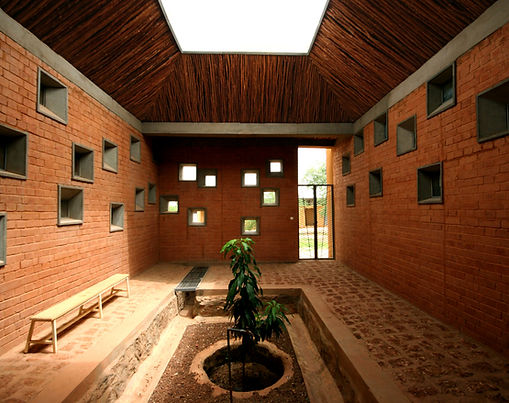
CSPS Laongo: Framing Health Location: Laongo, Burkina Faso
Part of the visionary "Opera Village" project initiated by Christoph Schlingensief, the Centre for Health and Social Welfare (CSPS) is not just a clinic; it is a piece of social sculpture. Designed by Kéré Architecture, the facility is defined by its playful, dynamic windows that frame the landscape like paintings, proving that architecture can provide dignity and beauty alongside medical care.

Eastgate Centre: The Urban Termite Mound Location: Harare, Zimbabwe
Built in 1996, the Eastgate Centre is a global landmark of sustainable architecture. Designed by Mick Pearce, this office and retail complex rejects the hermetic "glass tower" typology. Instead, it draws inspiration from African termite mounds to create a passive cooling system that keeps the interior comfortable without conventional air conditioning, saving massive amounts of energy while paying homage to the stone architecture of Great Zimbabwe.

The Nest @ Sossus: Biomimicry in the Namib Location: Namib Desert, Namibia
In the vast expanse of the Namib Desert, a structure rises not as a building, but as a biological anomaly. The Nest @ Sossus, designed by Porky Hefer, is a fully off-grid dwelling modeled after the massive communal nests of the Sociable Weaver bird. Crafted from a hand-bent steel skeleton and thatched with local reed, it is a piece of vernacular architecture that proves luxury can be organic, sustainable, and wildly imaginative.

Mapungubwe Interpretation Centre: The Vaults of History Location: Limpopo, South Africa
At the confluence of the Limpopo and Shashe Rivers, where South Africa, Zimbabwe, and Botswana meet, lies the site of an ancient trading civilization. The Mapungubwe Interpretation Centre, designed by Peter Rich Architects, honors this history not by imposing a foreign structure, but by birthing one from the earth itself. Using 200,000 hand-pressed soil tiles, the building forms a series of organic, free-form vaults that mimic the surrounding hills, blending ancient technique with modern engineering.
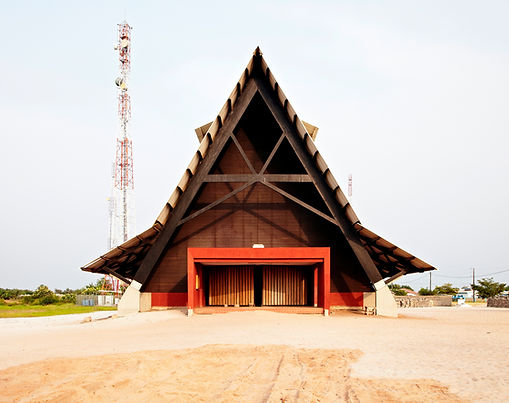
Church of the Assumption: Tropical Transcendence Location: Assinie-Mafia, Ivory Coast
In the coastal town of Assinie-Mafia, the Church of the Assumption rises from the white sands like a pair of praying hands. Designed by Koffi & Diabaté Architectes, this project transforms humble materials, timber and corrugated metal, into a majestic sanctuary. By embracing the tropical climate rather than fighting it, the church creates a naturally ventilated, triple-height space that is as sustainable as it is spiritual.

SOS Children’s Village Tadjourah: A Medina for the Future Location: Tadjourah, Djibouti
Located in one of the hottest places on Earth, the SOS Children's Village in Tadjourah is a masterclass in passive cooling. Designed by Urko Sanchez Architects, the compound rejects Western layouts in favor of a traditional "Medina" typology. By using narrow, shaded alleyways and distinctive "wind catcher" towers, the village protects its young residents from the harsh climate without relying on energy-intensive air conditioning.

Maternity Waiting Village: A Safe Haven for Mothers Location: Kasungu, Malawi
In rural Malawi, distance is often the biggest danger to expectant mothers. The Maternity Waiting Village, designed by MASS Design Group, addresses this by providing a safe place for women to stay near medical help during their final weeks of pregnancy. Rejecting the cold, barrack-style dormitories of the past, this project recreates the warmth of a traditional Malawian village, using earth blocks and shared courtyards to build a community of support.

Lycée Schorge: The Breathing Village Location: Koudougou, Burkina Faso
In Burkina Faso’s third-largest city, Francis Kéré has reimagined the school not as a building, but as a village. Lycée Schorge creates a protective "embrace" around a central courtyard, using locally harvested laterite stone and a stunning curtain of eucalyptus wood to create a space that is cool, shaded, and deeply inspiring for its students.

32° East Arts Centre: Urban Earth & Circular Creativity Location: Kabalagala, Kampala, Uganda
Located in the bustling heart of Kampala, 32° East is a sanctuary for creation. Designed by New Makers Bureau and Localworks, this arts centre is a masterclass in the circular economy. Built from the very soil excavated from its foundations and roofed with timber reused from its own construction scaffolding, it creates a serene, breathing space for artists amidst the urban chaos.

The Women’s House of Ouled Merzoug: A Hearth of Granite and Earth Location: Idelsane (Ouled Merzoug), Morocco
Perched on a ridge near the Atlas Mountains, the Women’s House is a sanctuary built by and for the women of Ouled Merzoug. Designed by the "Building Beyond Borders" program at UHasselt, this community center blends traditional Berber craftsmanship with contemporary design. Constructed from site-excavated granite and adobe bricks, it provides a vital space for sharing crafts, baking, and education, anchored by a lush forest garden that greens the arid landscape.

One Airport Square: The Ecological Diamond of Accra Location: Accra, Ghana
One Airport Square is a landmark that redefines what a modern office tower can be in a tropical climate. Designed by Mario Cucinella Architects, it is the first building in Ghana to receive a 4-Star Green Star rating. The design moves away from the inefficient glass-box standard, wrapping the building in a stunning diagrid concrete shell inspired by palm tree bark that provides self-shading and structural strength.

RICA: The World’s First Climate-Positive Campus Location: Gashora, Rwanda
Set on a 3,400-acre peninsula, RICA is more than a university; it is a radical model for the future of the planet. Designed by MASS Design Group, the campus integrates agriculture, ecology, and education into a single "One Health" system. Built almost entirely from local earth, stone, and wood, and powered by the sun, it is the first campus in the world designed to be climate-positive, proving that large-scale infrastructure can heal rather than harm the environment.

Hikma Community Complex: The House of Wisdom Reborn Location: Dandaji, Niger
Reviving the ancient Islamic tradition of uniting faith and knowledge, the Hikma project transforms a derelict mosque into a library while raising a new place of worship alongside it. Designed by Mariam Kamara (Atelier Masōmī) and Yasaman Esmaili (Studio Chahar), this complex is a harmonious dialogue between the secular and the religious, built entirely with earth to cultivate both the mind and the spirit.

Startup Lions Campus: A Tech Hub Inspired by Nature Location: Turkana County, Kenya
Located on the banks of Lake Turkana, this ICT campus combats youth unemployment by offering high-level training in a remote setting. Designed by Francis Kéré, the architecture draws inspiration from local termite mounds, featuring tall ventilation towers that utilize the "stack effect" to naturally cool the workspaces. Constructed from locally sourced quarry stone, the campus is a stunning example of biomimicry, blending advanced technology with ecological sustainability.

Lideta Market: The Fractal Concrete Souk
In a city rapidly filling with air-conditioned glass towers, Lideta Market takes a radical step backward to move forward. Rejecting the Western shopping mall typology, Vilalta Studio looked to the chaotic energy of Addis Ababa’s "Old Mercato" to create a breathable, vertical market wrapped in a fractal concrete skin.

The Magoda Project: Architecture Against Malaria
In rural Tanzania, a team of architects and scientists has proven that a building can save lives. The Magoda Project consists of eight prototype homes designed to fight malaria not with chemicals, but with geometry. By fusing traditional African methods with Asian typology, these "star homes" reduced indoor mosquito density by an astonishing 96%.